Voice AI Is Here: Will It Change How We Connect in 2026?
It's 2026, and if your home isn't talking back to you yet, you might just be missing the next wave of interaction. Voice AI has taken center stage, transforming the way we interact with our devices, homes, and even workplaces. From Amazon's Alexa to the sleek sophistication of Google's Assistant, voice AI isn't just a novelty anymore—it's becoming a necessity.
Let’s face it, typing is so last decade. As we continue to integrate voice technology into our daily lives, it's clear that conversational interfaces are reshaping more than just our gadgets. They’re altering industries, redefining customer experiences, and bringing us closer to a world where voice becomes the primary mode of interaction. So, how is this revolution unfolding?
Alexa, Google, Siri: The Power Trio
In the grand scheme of voice assistants, three titans continue to dominate: Amazon Alexa, Google Assistant, and Apple's Siri. Each has its own strengths, but recent advancements have seen their capabilities leapfrogging over one another.
- Amazon Alexa: With over 100,000 skills in its arsenal, Alexa is more versatile than ever. Its integration with smart home devices continues to expand, making it a household staple.
- Google Assistant: Known for its natural language processing, Google Assistant now boasts an impressive contextual understanding, making conversations smoother and more human-like.
- Apple Siri: While sometimes seen as the underdog, Siri has caught up with improved functionalities, particularly in privacy-centric environments.

These AIs aren't just playing music or setting reminders anymore. They're booking appointments, controlling smart homes, and even managing business operations. The competition among these giants is fierce, driving rapid advancements and innovation.
The Rise of Conversational AI in Customer Service
"Voice AI is no longer a luxury, but a customer service staple," says Jane Doe, CEO of Chatify, a leading voice AI integration company.
Customer service is experiencing a voice AI overhaul. Traditional call centers are evolving into more dynamic, conversational interfaces. Companies like Chatify are at the forefront, providing solutions that allow businesses to maintain human-like interactions without human intervention.
According to a recent survey by Tech Insights, 74% of consumers prefer dealing with voice bots for simple inquiries, citing efficiency and speed. Voice AI in customer service isn't just about answering questions—it's about providing a seamless, intuitive experience that feels personal, even when it's not.
Voice AI in Healthcare: More Than Just a Hype
Healthcare has been notoriously slow in adopting new tech, but voice AI is an exception. In 2026, we're seeing it being used to remind patients to take medications, schedule appointments, and even provide preliminary diagnosis advice.
Companies like Nuance Communications have developed voice systems that integrate with medical databases, allowing patients to receive healthcare information instantly. Doctors are also using these systems to transcribe consultations, reducing paperwork and focusing more on patient care.
This is not just about convenience. It's about accessibility and improving the quality of care received by patients globally.
Education Meets Voice AI
As classrooms become increasingly digital, voice AI is playing the role of a digital assistant to both teachers and students. Language learning apps, like Duolingo, now use voice recognition to provide real-time pronunciation feedback, enhancing the learning experience.
In colleges, voice AI assistants help students manage their scheduling, access course materials, and even aid in research by fetching information from academic databases.

The potential for personalized learning experiences through voice AI is immense, offering a tailored approach that caters to each student's needs, which was previously a massive challenge in traditional education settings.
Voice AI and Privacy Concerns: A Double-Edged Sword
With great power comes great responsibility—or in this case, privacy concerns. As voice AI becomes more embedded in our lives, the discussion around data privacy intensifies.
Companies like Google and Amazon have faced scrutiny over the data their devices collect. In response, they've increased transparency, allowing users more control over their data. However, privacy remains a significant hurdle in voice AI adoption.
What Companies Are Doing
- Google: Offers options to delete voice recordings and provides transparency reports.
- Amazon: Introduced automatic voice recording deletion settings.
- Apple: Continues its focus on on-device processing to limit data sent to the cloud.
Table Talk: Voice AI Across Industries
| Industry | Application | Leading Companies |
|---|---|---|
| Healthcare | Patient interaction, transcription, automation | Nuance, IBM Watson |
| Education | Language learning, study aids | Duolingo, Google |
| Retail | Customer service, personalized shopping | Amazon, Alibaba |
| Finance | Virtual assistants, fraud detection | Bank of America, Capital One |
These industries are not just dipping their toes into the voice AI waters; they're diving headfirst. As technology continues to improve, expect the list of applications to grow even further.
Voice AI in Automotive: Driving Innovation
The automotive industry is being revolutionized by voice AI, facilitating a safer and more intuitive driving experience. Manufacturers are incorporating voice assistants into vehicles, allowing drivers to control navigation, music, and even vehicle diagnostics hands-free. This technology is particularly beneficial in enhancing driver safety by minimizing distractions.
Automotive giants like Ford and BMW are leading this charge, with systems that allow drivers to ask questions about vehicle status, suggest optimal driving routes, and even remotely control smart home devices from the road.
This integration represents a significant shift in how we perceive interaction within our vehicles, promising a future where voice commands are integral to travel.
Voice AI in Smart Devices: The New Normal
Smart devices are increasingly adopting voice AI to provide users with seamless and intuitive control. From televisions to refrigerators, voice technology is becoming standard, allowing for hands-free operation and smart home integration.
Samsung and LG have introduced smart appliances that respond to voice commands, enabling users to check the contents of their fridge or adjust washing machine settings without touching a button. This adaptation highlights the convenience and efficiency voice AI brings into home life.
These innovations not only enhance user experience but also set the stage for more advanced home automation solutions, propelling us towards fully voice-controlled environments.
What This Means Going Forward
The integration of voice AI into multiple facets of our lives signifies a paradigm shift in human-machine interaction. As we move beyond 2026, the potential for voice AI to transform new and emerging industries is immense. The technology is expected to grow even more intuitive, with improvements in emotional recognition and multi-lingual processing capabilities.
This evolution will likely lead to broader adoption and newer applications that we have yet to imagine. However, alongside technological advancement, there will be an increasing need for ethical considerations and privacy safeguards to build trust with users.
Ultimately, voice AI is set to redefine how we connect with technology and each other, making it an indispensable part of the digital landscape. Embracing this shift will be crucial for individuals and businesses alike to remain relevant in an ever-evolving tech world.
Future Prospects: Beyond 2026
Looking ahead, voice AI is poised to become even more sophisticated. With advancements in AI learning algorithms and natural language processing, the boundaries of what voice AI can achieve are expanding rapidly.
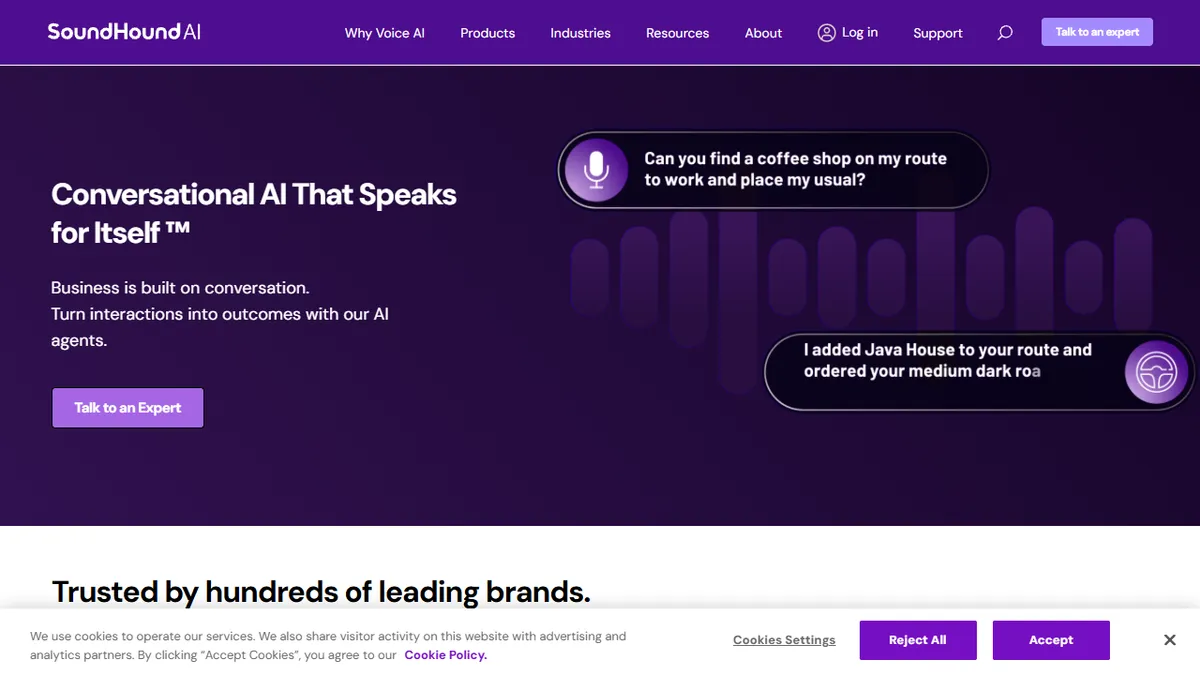
Emerging companies like SoundHound and Deepgram are pushing the envelope, exploring new ways to integrate voice technology into untouched areas. The prospects are exciting, from more personalized interactions to the potential for voice-driven data analytics.
The question isn't whether voice AI will become a part of daily life, but how quickly it will happen and how seamlessly it will integrate.
Conclusion: Voice AI Is Here to Stay
Voice AI's journey from a curious novelty to a fundamental aspect of tech interaction is undeniable. As we venture further into 2026, the landscape continues to evolve, driven by both established giants and innovative newcomers.
Whether it's enhancing customer service, revolutionizing education, or transforming healthcare, voice AI is reshaping our interaction frameworks. The real challenge lies in navigating the ethical and privacy concerns that accompany this technology, ensuring it continues to benefit society as a whole.
So, if your devices aren’t talking to you yet, perhaps it's time to start the conversation with voice AI. It's not just the future—it's the present evolving right in front of us.